
Panzath Festival: Kashmir's Ancient Tradition of Water, Community, and Conservation

Every May, in a small village tucked at the foothills of the Pir Panjal mountains in South Kashmir, something extraordinary happens. Hundreds of people step into the cold waters of a centuries-old spring, wicker baskets in hand, laughter in the air. Men, women, children, and elders. All of them together. They are not there for a picnic. They are there to fulfil a promise made by their ancestors generations ago. This is the Panzath Festival. One of Kashmir's most unique, most overlooked, and most quietly remarkable traditions.
Where Is Panzath?
Panzath is a village in the Qazigund area of South Kashmir, located just a kilometre from the Srinagar-Jammu National Highway. It sits at the base of the Pir Panjal mountain range, surrounded by meadows and forests that give way to one of the most remarkable natural features in the Kashmir Valley: the Panzath Nag. Panzath Nag is not a single spring. It is a cluster of nearly 500 freshwater springs spread across a 1.5-kilometre radius around the village. The name itself tells the story. Panzath is believed by locals to derive from words meaning "five hundred," a reference to the hundreds of natural springs that define this landscape. These springs are not just beautiful. They are vital. Panzath Nag supplies drinking water and irrigation to over 25 villages in the Qazigund area, including Vessu, Nussu, Bonigam, Babapora, Newa, Wanpora, and Panzath itself. For the communities that depend on them, these springs are not a scenic backdrop. They are the lifeline of everyday life.
What Is the Panzath Festival?
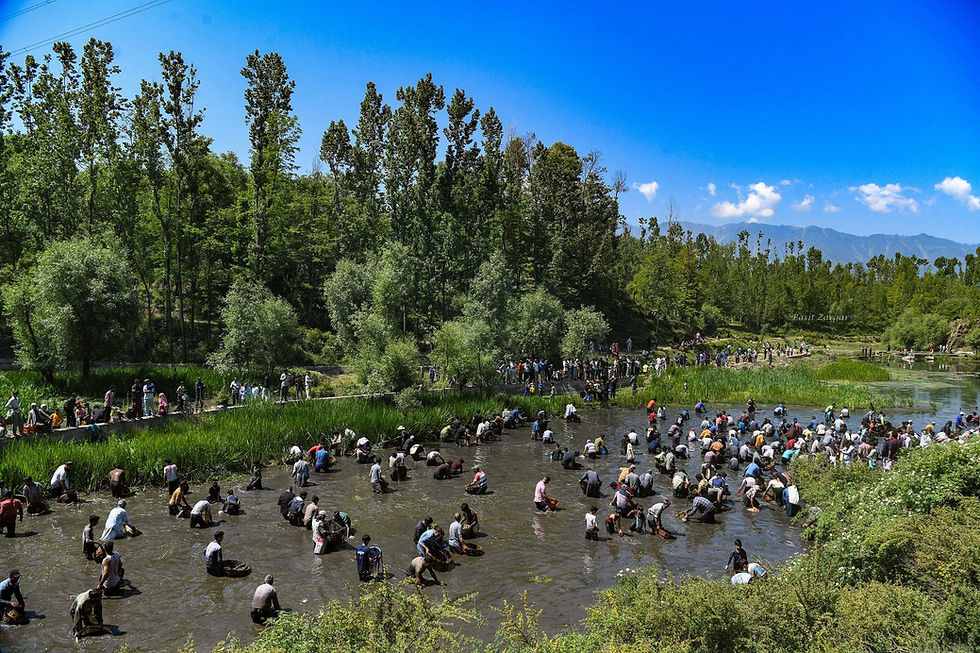
The Panzath Festival is an annual community gathering held every spring, typically in May. It brings together villagers from Panzath and surrounding areas for a day of collective spring cleaning, fishing, feasting, and remembrance. At its heart, the festival is an act of environmental maintenance wrapped in centuries of cultural tradition. The community gathers to clean the Panzath Nag springs, removing weeds, silt, and debris that accumulate over the year. Once the cleaning is done, the springs are opened for fishing. Villagers wade in with traditional wicker baskets and handmade nets, catching fish that are then shared with families and friends as part of a community feast. The festival does not end with the fishing, though. As the sun sets over the Pir Panjal mountains, families walk to the village graveyard carrying fresh flowers and cups of water. They sprinkle water over the graves of their loved ones and offer Fateha, a prayer for the departed. This ritual, known as Roohan Poush, gives the day a spiritual weight that goes beyond the ecological. After the physical cleansing of the spring, there is a quiet cleansing of memory and gratitude.
How Old Is This Tradition?
The exact origin of the Panzath Festival is not recorded in any single document. Locals say it has been practised for centuries, a tradition inherited from ancestors who understood, long before modern environmentalism existed, that the springs would only remain clean and free-flowing if the community took responsibility for them.
What Happens on Festival Day?
The day begins at dawn. As mist lifts from the Pir Panjal foothills, people begin gathering at the banks of the Panzath Nag from the village and surrounding areas. Wicker baskets, traditional nets, and wooden tools are carried down to the water.
The cleaning comes first. Villagers wade into the shallow streams and begin pulling out weeds, removing silt, and clearing the channels that feed the springs. It is hard work, but it does not feel like it. Children splash through the water chasing fish. Elders guide the younger ones on technique and tradition. Songs echo through the village. The atmosphere is festive and communal, closer to a village fair than a work party.
Once the cleaning is done, the fishing begins. The method is traditional and sustainable. Wicker baskets are dipped into the water, collecting fish and occasionally trash, which is deposited on the banks for disposal. Trout, particularly the boneless variety, is the prized catch. Families take their catches home and cook together, and the festival extends into a community feast well into the evening.
As dusk settles, the tone changes. Families move to the graveyard for Roohan Poush, the offering of water and flowers to departed relatives. It is a moment of quiet reverence that grounds the day's celebration in something deeper: an acknowledgement that this tradition was handed down by those who came before, and that it will be passed on to those who come after.
Why This Festival Matters
The Panzath Festival is not just a local event. It is a model. In an era when rivers are choked with pollution, springs are drying up, and water conservation is debated in government committees and international conferences, Panzath offers a different kind of answer. One that has been working for centuries without any budget, any policy, or any outside intervention. The springs of Panzath Nag provide clean water to over 25 villages. They support irrigation for farmland across the Qazigund region. And they remain clean and free-flowing, not because of any government scheme, but because a community made a decision, generations ago, to take ownership of their water. Environmentalists who have studied the festival describe it as an indigenous model of sustainable water management that modern conservation efforts can genuinely learn from. The festival also fosters a sense of ownership in younger generations who grow up not as observers of tradition, but as participants in it.
Panzath and Kashmir Allure
At Kashmir Allure, our products come from the same land and the same people that this festival celebrates. The farmers who grow our Kashmiri walnuts, almonds, anjeer, and saffron are part of communities that have lived by these values for centuries: caring for their land, their water, and their heritage not as a philosophical choice but as a way of life. The purity you taste in a Kashmiri walnut or a strand of Mongra saffron is the product of that same relationship between people and land. When you choose Kashmir Allure, you are connecting with a place and a people who understood, long before the rest of the world caught up, what it means to live in balance with nature.
Plan a Visit to Panzath
If you are visiting Kashmir, Panzath is worth adding to your itinerary, especially if you are travelling in May.
Location: Panzath village, Qazigund, South Kashmir, approximately 1 km from the Srinagar-Jammu National Highway
Best time to visit: May, during the annual festival
What to expect: Spring cleaning, community fishing, traditional food, and the Roohan Poush ritual at dusk
Getting there: Accessible from Srinagar via the national highway, approximately 80 km


Comments